

创造力的本质是什么?
AI会取代科学家吗?
诺贝尔奖终将被超级智能垄断?
AI浪潮下如何应对失业危机?
在11月24日2025国际AI科学家大会(ICAIS)高端圆桌论坛《AI科学家:现状及未来》上,三位诺奖得主与顶尖学者组成豪华对话天团,用“诺奖级洞察力”回应AI时代核心争议,会给出怎样的震撼答案?
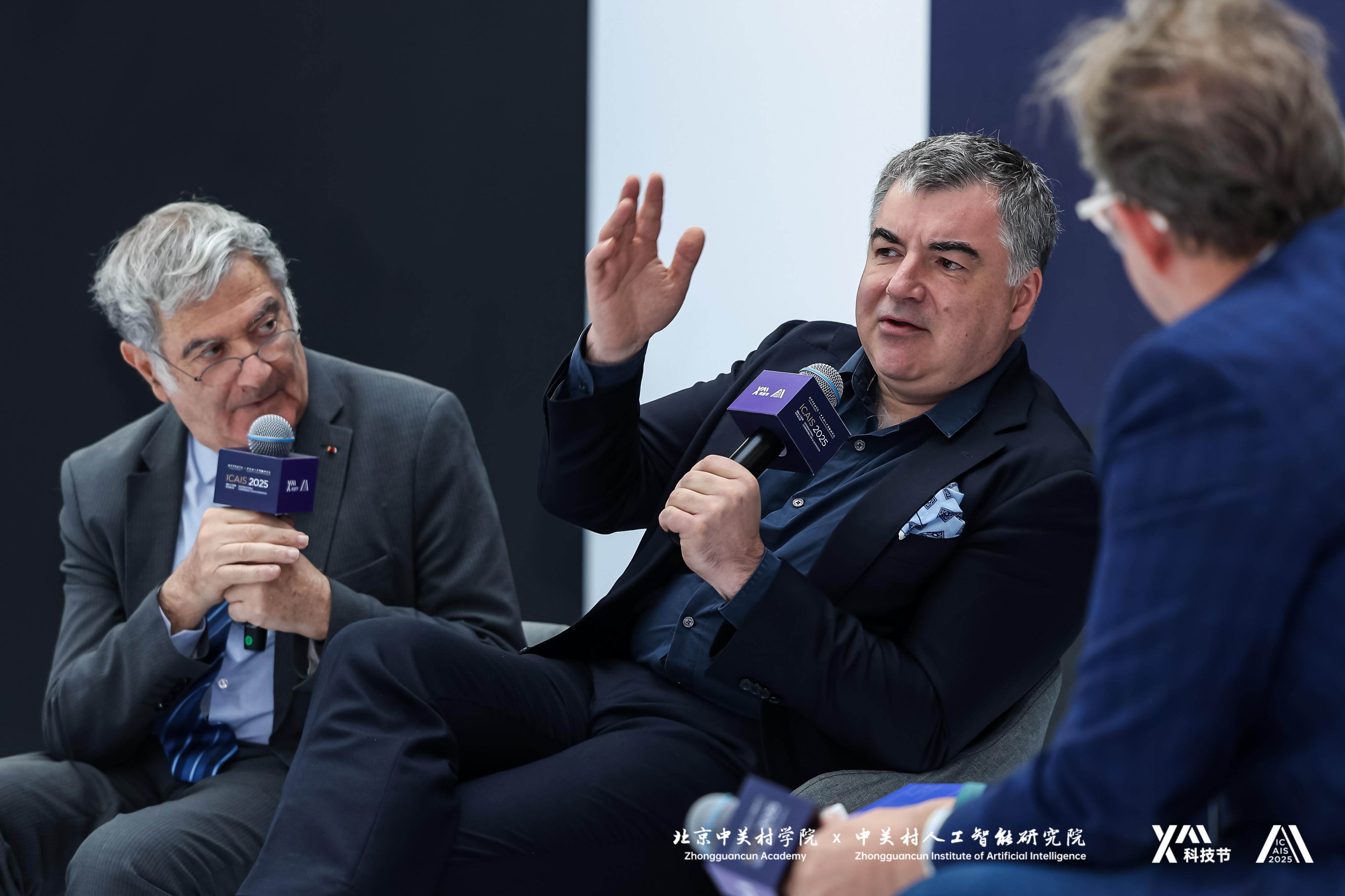
这又是一场跨越30年的智慧碰撞,同一领域年龄相差30岁的两位物理学诺奖得主——康斯坦丁·诺沃肖洛夫与塞尔日·阿罗什重磅同台,又会摩擦出怎样的多元火花?

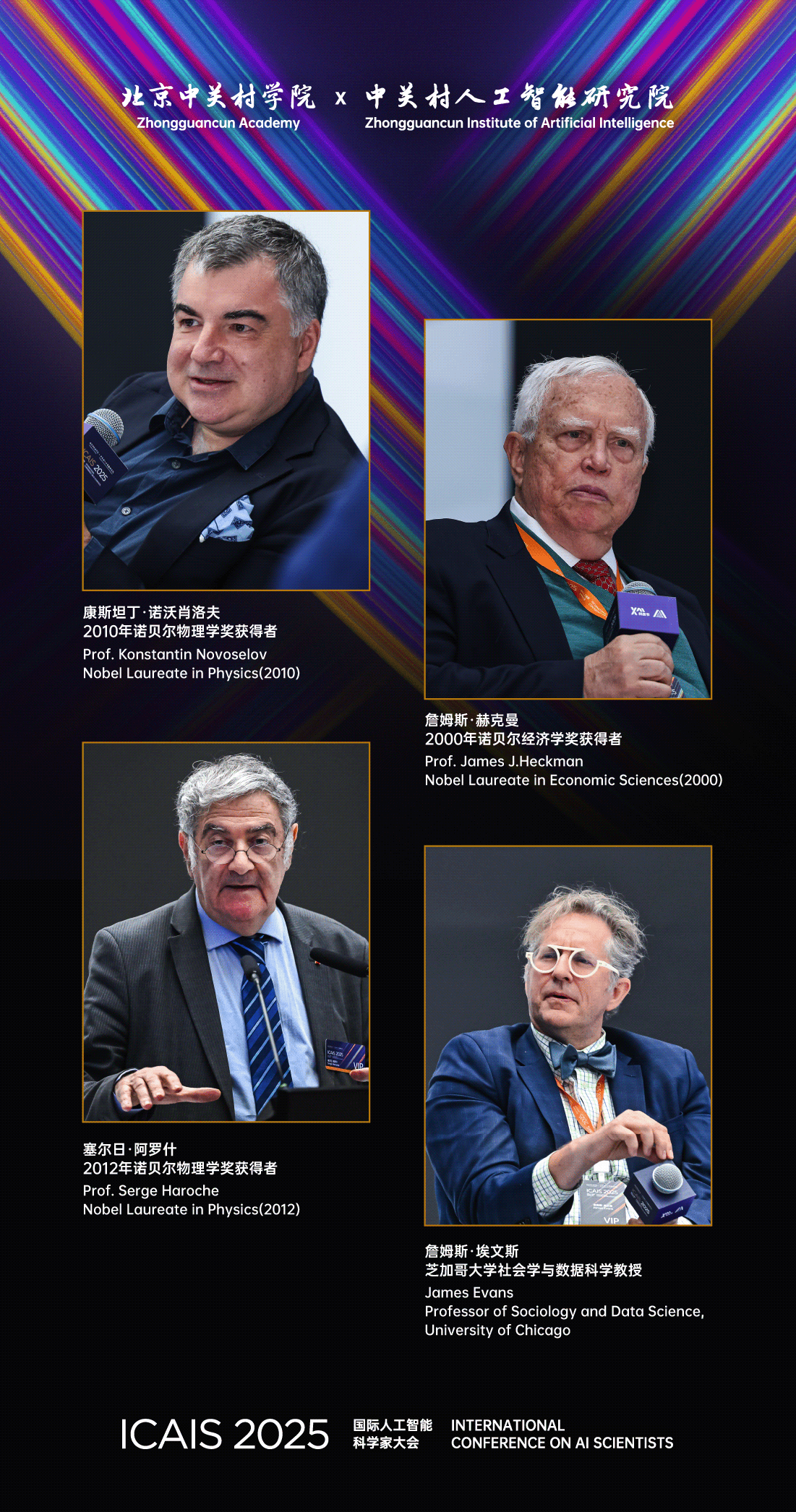
对话嘉宾
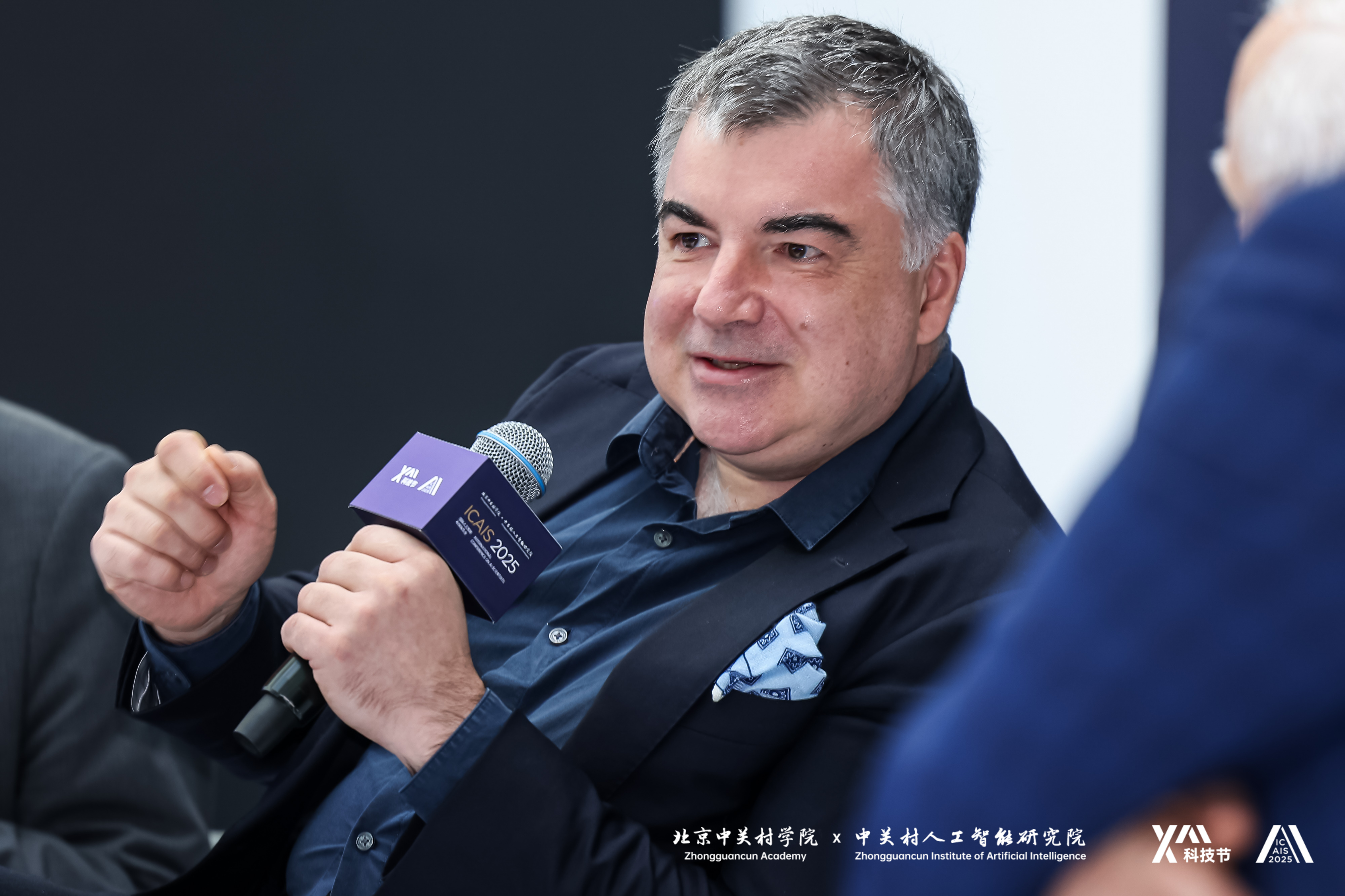
康斯坦丁·诺沃肖洛夫(Konstantin Novoselov)2010年诺贝尔物理学奖得主,中国科学院外籍院士,新加坡国立大学功能智能材料研究所所长
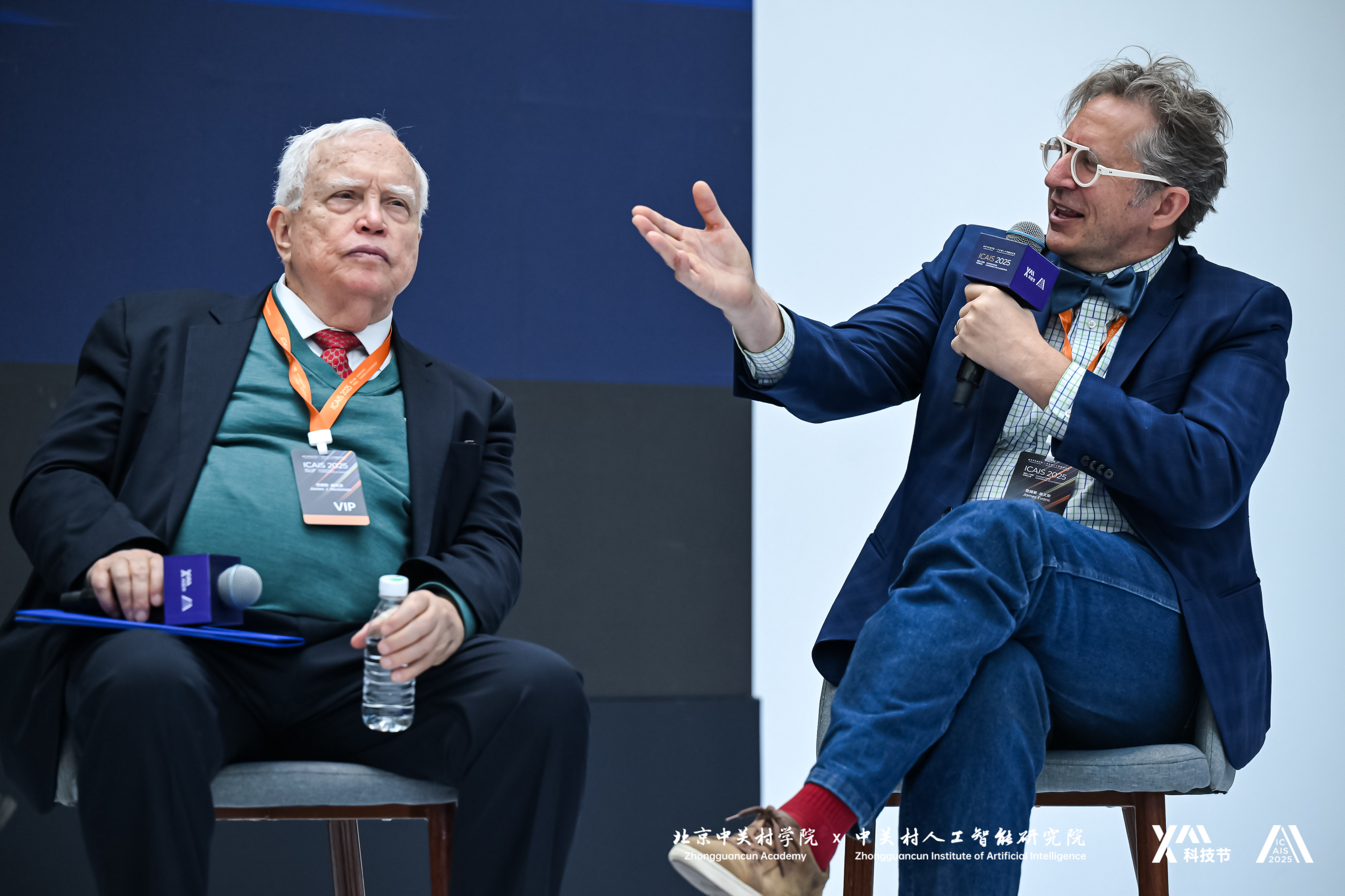
詹姆斯·赫克曼(James J. Heckman)2000年诺贝尔经济学奖得主,美国经济学家,香港中文大学博文讲座教授。
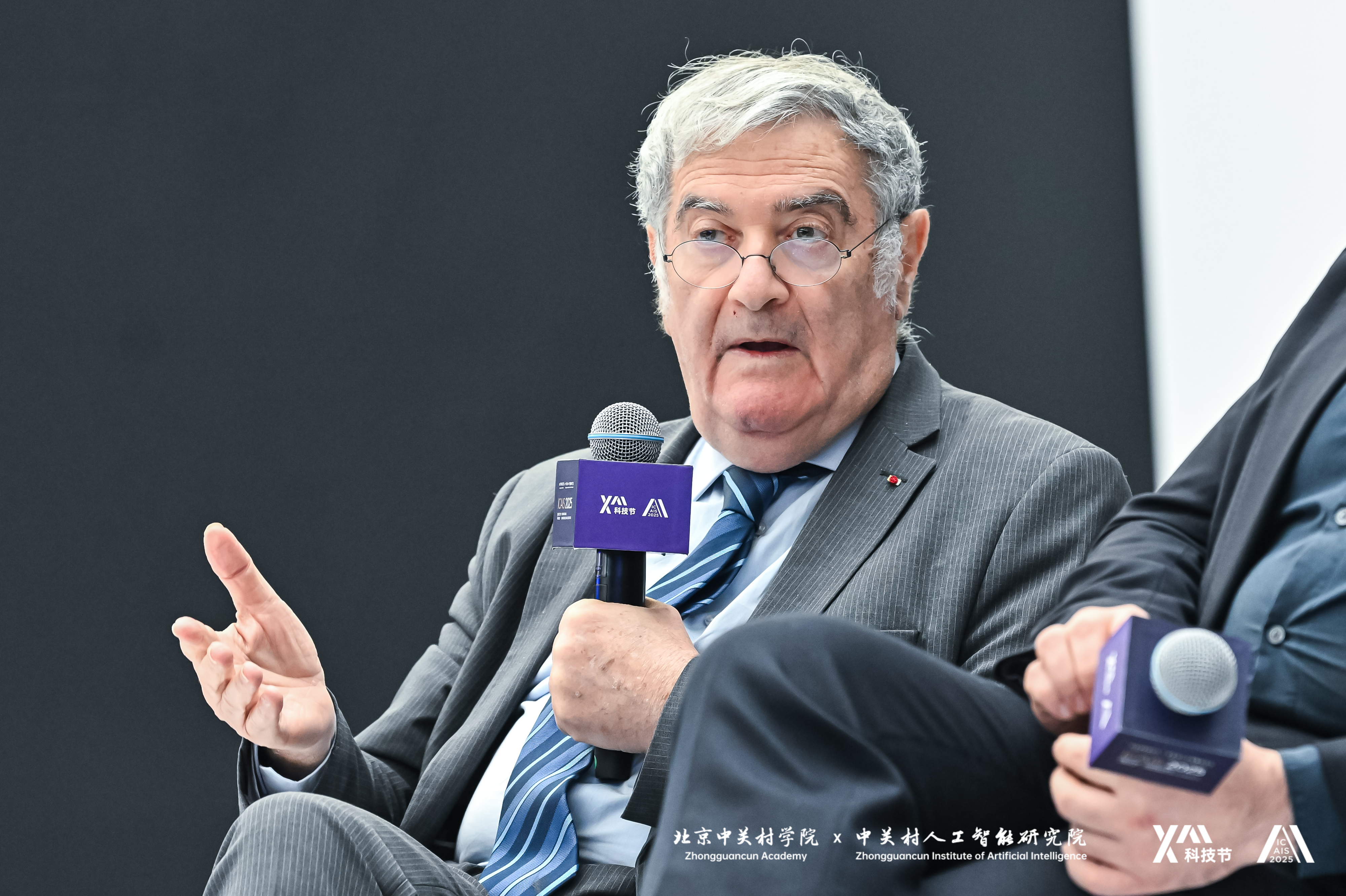
塞尔日·阿罗什(Serge Haroche)2012年诺贝尔物理学奖得主,法国科学院院士,巴西科学院外籍院士,法兰西公学院名誉教授
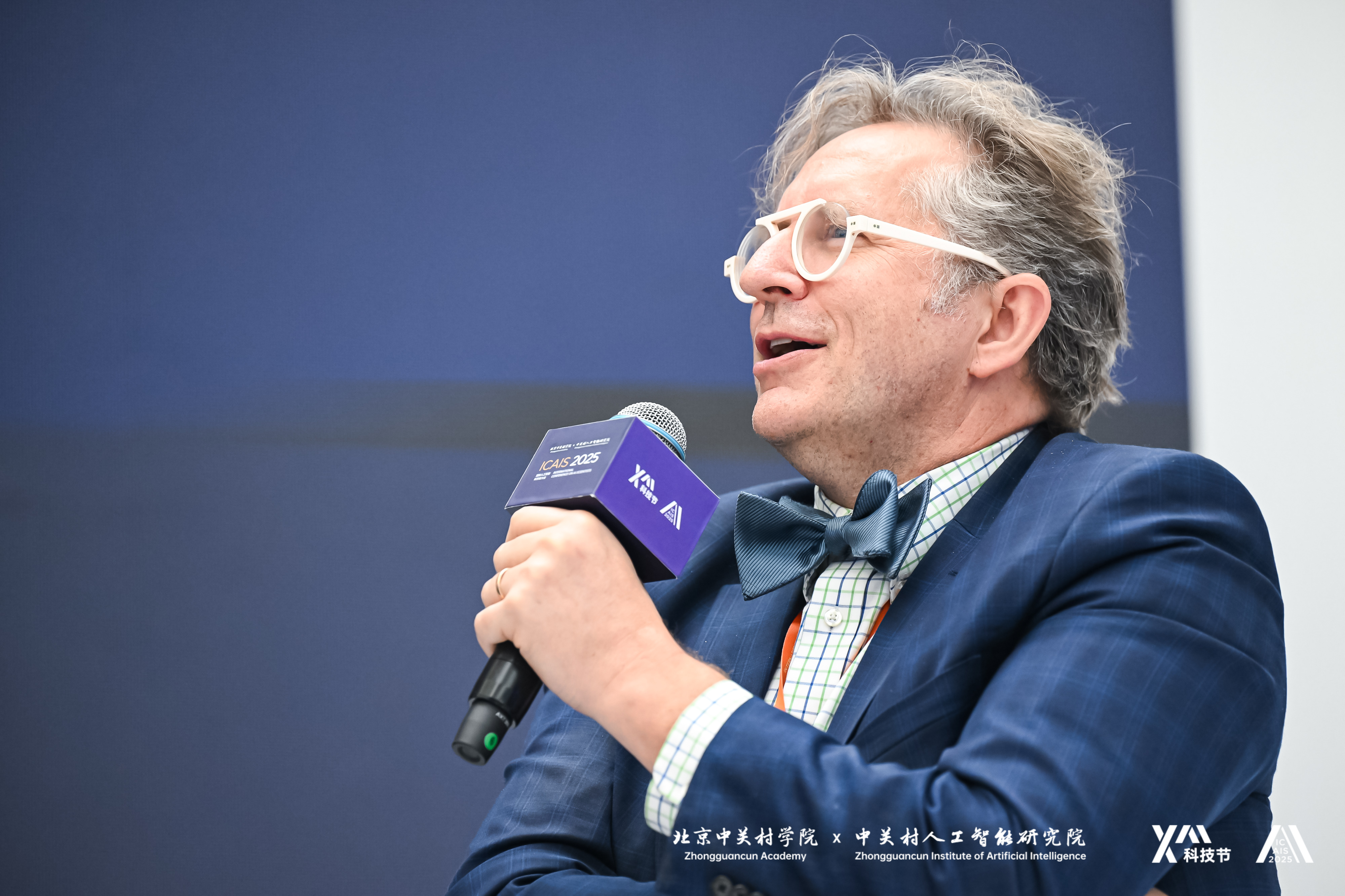
詹姆斯·埃文斯(James Evans)芝加哥大学社会学与数据科学系教授,知识实验室主任
主持人 徐丰力博士,北京中关村学院共建导师、清华大学电子工程系助理教授
颠覆性话题,诺奖大佬正面battle!
1.AI有真正的创造力吗?
Serge Haroche:创造力的核心是人类的提问
AI终究只是工具。AlphaFold能精准预测蛋白质三维结构,但破解分子折叠的底层机制、提出关键研究问题的,永远是人类。AI擅长在海量数据中找“相关性”,却无法像人类那样创造“波函数”、“虚数”这类全新概念工具,更谈不上对事物本质的执着追问——真正的创造力,藏在向AI抛出的“提示词”里,藏在问题本身里。
Konstantin Novoselov:AI能撞出突破却难成跃迁
不否认AI可能通过百万次尝试的偶然爆发,产生“概率性突破”。但真正的创造性突破,是“知识积累到临界点的认知相变”——就像量子力学的诞生、虚数概念的提出,是人类认知维度的罕见跃迁,这种需要重构思维框架的突破,AI 永远无法通过数据训练复制。
2. AI能否跻身诺奖得主之列?
James Evans:2030年AI社群或将改写诺奖规则
当前诺奖偏向单一领域、较少覆盖的价值空白。未来,由AI组成的“创新社群”,完全可能产出诺奖级成果。AI的跨领域类比能力是人类无法企及的——它能突破教育背景、物理经验的局限,在不同学科边界自由穿梭,实现人类不敢想、做不到的跨学科创新。
Serge Haroche:永远不会有一位AI科学家站上诺贝尔奖的领奖台
诺贝尔奖表彰的是提出问题的勇气与认知局限的突破,这是AI永远不具备的。 诺奖的核心价值从不是“谁产出了成果”,而是“人类如何利用工具突破自我、追问真理”——是人类在使用AI时的思考、质疑与边界突破,让成果有了被表彰的意义,而非工具本身的产出值得颁奖。
3. AI时代下怎么看待失业?
James Heckman :AI取代的不是岗位,是缺乏动力学习新技能的人
“我并不认为我们会失去所有这些工作。”当新技术和新工作岗位出现时,被淘汰的往往是那些缺乏动力去学习新技能的人。就想每一次工业革命,在改写行业格局的同时,也扩张了生产力边界,催生全新产业——如今自媒体等职业因工具简化而触手可及,便是最好的证明。AI时代,人类更该思考的是如何“创造”出更有价值的工作/岗位,而非畏惧替代。
这场看似观点交锋的思想碰撞,恰恰是顶尖学者对AI时代科学本质的深刻叩问与理性思辨:AI或许可以改变科学的效率,却无法替代人类独有的核心价值——对未知的好奇、对真理的执着、对认知边界的突破。
AI时代的浪潮下,真正的科学家从未被工具定义。他们始终是那些敢向“不可能”发问、以人类独特的思辨视角锚定探索方向的追光者,用思考与坚守,标注着科学探索的人文底色。
这场诺奖级的思想盛宴,每一种观点都值得深思。你更认同哪种学者的见解?欢迎在评论区留下你的思考,和我们一起探讨AI与科学的未来!

附本次圆桌论坛的完整演讲实录:
High-Level Roundtable: AI Scientists — The Present and Future
高峰圆桌论坛:《AI科学家——现状与未来》
主持人:徐丰力, 北京中关村学院共建导师、清华大学电子工程系助理教授
Moderator: Dr. Fengli Xu, Faculty at Zhongguancun Academy, Tenure-track Assistant Professor in the Department of Electronic Engineering at Tsinghua University
话题一:与AI的个人连接
>> Moderator: I will start with a warm up question. I want to ask about your personal connection with AI, either in your daily life or in your research work or even in a conversation with friends. So which AI are you most familiar with, and how do you think is the current status of AI development? We’ll start with Professor Haroche. Thank you.
主持人:我想用一个热身问题开始我们的讨论:您个人与AI的连接是什么?无论是在日常生活、研究工作,还是在与朋友的闲聊中,您最熟悉哪种AI,您觉得AI发展现状如何?有请塞尔日·阿罗什教授先分享,谢谢。
>> Serge Haroche: I think I would disappoint you because I have no direct connection with AI. When I did my research, AI was not yet really developed. But since then I have been intrigued by the ability of this tool to make progress in science. And the question I'm very much interested in and the one I developed in my talk this morning is “Is AI really creative?", “How can you relate it to creativity in basic science?” and “What is the difference between the kind of Intelligence you get from AI, from the intelligence we have in our brain?” So that's what interests me. And I discussed that last year with a lot of scientists, mathematicians, physicists, chemists who are working with AI now. And this interaction has been very interesting for me. So I guess we would talk about that in the part of the discussion today.
Serge Haroche:我想我可能会让您失望,因为我与AI并没有直接联系。我做研究的时候,AI尚未真正发展起来。但自那以后,我对这项工具推动科学进步的能力产生了浓厚兴趣。我上午的演讲中探讨的核心问题就是:“AI真的具有创造力吗?”“它与基础科学中的创造力有何关系?”“AI给出的智能与我们大脑中的智能有何不同?” 这正是我感兴趣的地方。去年我与许多如今从事AI研究的科学家、数学家、物理学家、化学家讨论过,这些交流令我受益匪浅。
>> Konstantin Novoselov: I'm a physicist and materials scientist, and to be honest for my daily life, I prefer to twist English in my own way but when it comes to my science, we really came to the point where we need new tools to understand the complex system as well as the origin of complexity. And we can see that it's impossible to do it with the traditional methodologies. Whether AI is going to be the solution, the panacea for this, is not clear yet. But at least we are trying, and we have been trying for several years now. We went many different cycles, from complete euphoria to complete disappointments. But it's a good family, it's a fun process.
Konstantin Novoselov:我是物理学家兼材料科学家。老实说在日常生活中,我更喜欢按我自己的方式“扭曲”英语(开玩笑),但做科研时,我们确实走到了需要新工具来理解复杂系统及其复杂性起源的节点,传统方法已无能为力。 AI是否会成为解决一切的“灵丹妙药”尚不可知,但至少我们已在尝试,并且循环经历了从极度兴奋到彻底失望的多个周期。不过这是个好工具,过程本身也充满乐趣。
>> James Heckman: I have multiple uses. I mean, immediately I remember just about a year ago I was translating a document, actually for this Chinese project. And literally DeepSeek came out, I had a Chinese research assistant, we translated the statement, then all my data were written in Chinese, the description. So I could translate immediately. He checked it and verified it was very good.
James Heckman:我有很多使用场景和方式。印象很深的是,大约一年前我参与了一个中国团队的项目,需要翻译一份文件,当时DeepSeek刚上线,我和一位中国研究助理合作,我需要把声明和所有数据译成中文,当时仅用很短的时间就可以完成,我的助理校对后也表示翻译质量非常好。
But for ordinary computation and for things having to do with kind of creating alternatives to think about, that's where I found it constructive. Some of the ideas that I've heard at this symposium and then at the poster sessions also last night, suggest additional usages about AI that I will investigate and further in my own research.
此外,我发现AI在普通计算以及“帮我想出可供思考的替代方案”这两件事上特别有建设性。这次研讨会和昨晚的海报交流里,我又听到不少AI的新用法,接下来我会在自己的研究里继续尝试。
I do a lot of work, some of it though really consists of trying to value, trying to scrape. I think of all the different arguments that are out there in the literature, all the different papers, and there's a lot of knowledge that's there that gets lost, simply because there was no way to collate it. There're usually surveys and things like this are done, but are done in a way that is very eclectic. It depends on your background. Your friends, what you read in graduate school, and this helps avoid that. So I view it as an additional source of information. It's not central though, I'm not doing everything in AI for sure.
我大量工作其实是“打捞”文献——把散落在论文里的不同论点收集起来。文献中存在的不同论点、不同的论文,因为过去缺乏整理手段,很多知识就此埋没。过往,我们有综述。但传统综述的书写方式比较随意,它取决于写作者的背景、你的人脉,以及你在研究生阶段读过什么,AI则有助于避免那种随意性和偏差。所以我把它视作额外的信息来源,但并非核心——我绝不会把所有工作都交给AI。
>> James Evans: I'm a sociologist and kind of meta scientist that builds AIs that think about problems and answers. I think my first exposure was really during my PhD pretty intensively 25 years ago, it wasn't called AI, then it was natural language processing and machine vision. Any time they would call it - you know, anything that didn't fail was no longer AI, but it was the same vector machines in some ways that we're using in a massively stacked way today.
James Evans:我是社会学家,也是“元科学家”,专门构建能思考问题并给出答案的AI。我真正密集接触AI始于25年前读博期间,当时它还不叫AI,而是自然语言处理与机器视觉。那时候人们常说——你知道的,凡是没失败的(做成功的)就不叫AI了。但在某些方面,当时用的其实就是如今被我们大规模堆叠使用的向量机。
I use it for all kinds of things. I've got AI representatives that are kind of like James Zou that capture different perspectives that are arguing in parallel on servers right now, playing with a variety of different data problems. I'm most interested and excited about the tails of the distribution. These are compression engines, and so, how can you use them to recognize those tails and amplify them? And consider, for example, if there's surprising data, what are all the things that were improbable moments before that now become probable because of these off manifold things?
如今我会让多个AI智能体同时在线(比如模拟像James Zou这样的学者),并行辩论各种数据问题,捕捉不同的视角。我最感兴趣和最兴奋的是数据中的“尾部”(极少发生、极端、离群的事件)。这些模型本质上是“压缩引擎”——它们把海量信息压成一张概率地图。我想知道,怎样才能让模型重新发现数据里那些概率极低、被压扁到几乎消失的“边缘事件”,并把它们放大?举个例子:当某条完全出人意料的数据突然出现,它恰好落在地图外的“低概率区”,AI能否利用这条数据作延伸,系统性地盘点并放大所有因它而变得“可能”的潜在事物?
So I think they're typically used to fill in the missing cells of a matrix, like Professor Haroche was describing, but they don't need to be used that way. I think they can be inverted.
按照塞尔日·阿罗什教授的说法,人们通常拿这些模型来“填表”——把矩阵里缺的数据像补空格一样补齐。但我觉得完全可以反着来,不是去补缺口,而是去挖那些被压到表格外、几乎为零的极端格子,把它们放大、拎出来。
话题二:AI的自主性与创造力
>> Moderator: As we are at this AI scientists conference, I think we would like to believe that AI is going to evolve into a certain level of autonomy. At least like in yesterday's poster session, we have seen research papers that are generated by AI completely - end to end research papers. And this morning professor James Zou also shared with us like the virtual lab, how he worked with his AI colleague to develop a covid vaccine. I guess a key question here is how does this autonomy differ from creativity? I want to ask Professor Haroche and like how can we evaluate, if we can evaluate for creativity? So your talk this morning gave us a lot of inspiration. Can you please share more on this? Thank you.
主持人:我们身处国际AI科学家会议,我相信与会嘉宾愿意相信AI发展出了某种程度的自主性。至少在昨天的海报环节,我们看到了完全由AI生成的端到端研究论文。今早James Zou教授也分享了虚拟实验室,以及他如何与AI同事合作开发新冠疫苗。这里的关键问题是:“自主性”与“创造力”有何不同?我想请教塞尔日·阿罗什教授,我们能否、又该如何评估创造力?您上午的演讲给了我们很多启发,能请您多分享一些吗?谢谢。
>> Serge Haroche: I think the creativity lies in the prompt, in the question that you ask AI to give the answer to. AI has a fantastic ability to store and process a huge amount of information. If you ask the right question, you can maybe find an answer to some specific question that you're asking.
Serge Haroche:我认为创造力在于提示词,在于你让AI回答的那个问题。AI拥有存储和处理海量信息的惊人能力;如果问题问得对,你或许能得到针对特定问题的答案。
I think one very good example is the one I gave this morning about the AlphaFold project. The fact that AI was able to predict the 3D structure of proteins just from the sequence of amino acids. But in order to get to this result, I am sure that the people who used AI and won a Nobel Prize for that, were the people who are creative, not the AI itself, but the fact that they were able to ask the right question, for instance, they asked AI to relate, to use data coming from life system which have evolved starting from a common branch at some point in the evolution, have evolved in different branches, and to look at the common points between these evolutions, which explain why some amino acids have been found close to each other at some point. They used this kind of evolution description to get some hints about the structure, how this sequence of amino acids would end up into a given structure or not.
我上午举的AlphaFold例子就很典型:AI仅凭氨基酸序列就能预测蛋白质的三维结构。但之所以能取得这一成果,关键不在于AI本身,而在于那些使用者,也就是那些最终因此获得诺贝尔奖的人,他们身上的创造力。他们懂得提出正确的问题。例如,他们让AI去利用这样一套数据:生命系统源自共同祖先,在某个进化节点分叉后沿不同分支演化,他们要AI寻找这些演化历程中的共同点,从而解释为何某些氨基酸在空间中彼此靠近。正是借助这种关于进化的描述,他们才得以获得线索,判断某段氨基酸序列最终能否折叠成特定结构。
So this was, I think, very useful. But what I'd like to stress is the fact that it does not give any hint about the mechanism which relates the sequence of amino acid to the final shape of the molecule. And I think this is what real creativity would be. To find the mechanism by which this molecule can decipher, basically, to find out what will be the final structure. And this is a question which remains open. So AI is very useful to find this correlation, to predict this protein structure. But in my view, it's not really at a deep stage which would allow us to say that AI by itself is creative. So I think it's debatable and we can discuss that. But in my view, AI is useful to find correlation, to give hints about the way how this correlation can be related to some kind of causality. But you need something more if you want really to get into the depths of things.
AI在发现这种相关性、预测蛋白质结构方面非常有用。但我想要强调的是,它并没有提供任何关于“机制”的线索——即氨基酸序列究竟是如何决定分子最终形状的。而在我看来,真正的创造力恰恰在于发现这种机制,破解分子如何形成最终结构的奥秘。这仍是一个未解之谜。所以,AI在寻找相关性、提供线索暗示某种因果联系方面很有用,但若想真正深入事物的本质,还需要更多、更深入的探索工作。
And I give as another example the fact that we need to have a cosmological theory explaining what happened in the early stage of the universe, what happened at the point when gravitation and quantum physics had to be described together? And I don't think that if you feed the huge amount of information to AI, just feeding the information and asking for the theory, that you will find it.
我再举一例。我们尚缺一套宇宙学理论,能够说明宇宙早期究竟发生了什么。在那个必须同时描述引力与量子物理的节点上,到底出现了怎样的机制。而我并不认为,只要把海量信息塞进AI,仅仅靠给它喂数据再跟它说“请给出理论”,就能得到靠谱的理论。
You need something which will come from the human brain. Maybe it's wishful thinking on my part, I can’t be sure of that, but that's what I think and what I hope. When they discuss with someone who tells me that AI, that artificial intelligence will overcome and supersede classical intelligence, I think that this person is much more pessimistic than I am. And I hope he or she is wrong but of course I have no other argument than this kind of gut instinctive feeling that I have.
你需要某种源自人类大脑的东西。也许这只是我的一厢情愿,我无法确定,但这正是我所想、每当有人跟我说,人工智能——终将压倒并取代传统智能时,我觉得对方比我还悲观。我希望对方是错的。当然,除此之外,我除了这种直觉感受之外,也拿不出别的论据。
>> James Heckman: Can I just ask a question? It's about your lecture. That is, I'm really curious, but isn’t there an awful lot of regularities in physics and other parts of science that are essentially predicted relationships like gravity and Coulomb’s Law. These are relationships among different - but the causal mechanism that you're describing is a much deeper kind of consideration. I think a lot of science that we consider good science, doesn't have that property or mechanism.
James Heckman:我能问一个问题吗?是关于你上午演讲的。我真的很好奇,在物理和其他科学领域里,不是存在极其大量的规律吗?比如引力定律、库仑定律,它们本质上是“预测关系”,只是变量间的关联,而您刚才强调的那种“因果机制”似乎要深得多。我觉得很多被我们奉为“好科学”的成果,其实并不具备这种深层机制。
I'm not a physicist, so I'm not pretending to know, but I can certainly say my understanding of gravity and a lot of these laws that were actually developed, were actually just regularities that were found to be very powerful. So that would mean the role for AI, is all I'm saying. Go ahead.
我不是物理学家,不敢妄言,但我的理解是,引力等定律当初其实只是被证明极具解释力的规律性而已。所以我的意思是,AI的作用可能正在于此。
>> Konstantin Novoselov: I can probably try to answer here. So from the hindsight perspective, yes, it is, it looks like regularities. But typically how the - to see them as regularities, we usually create a new language. And then it makes it very logical and very smooth. So, how science, at least in our societies of science works, for most of the time we just accumulate a lot of knowledge, create this pressure on the knowledge bubble or maybe pressure in your brain, and at certain moment it bursts, and this bursting is what we call the creative moment when some new idea is developed.
Konstantin Novoselov:我也许可以在这里尝试回答一下。事后回头看,确实,它们看上去就像规律。但通常要把它们当作规律来看,我们得先发明一套新的语言。而后,它会变得顺畅、合乎逻辑。科学,至少在我们这些科学共同体是这样运作的:大多数时候,我们只是不断累积大量知识,给“知识气泡”加压,或者说给你的大脑加压,到了某一时刻,它突然破裂,这一爆裂就是我们所说的“创造时刻”,新想法由此诞生。
But typically for me, it is associated with the creation of new knowledge. You just look at the same subject but from a different angle. Quite often, literally, new languages are created, like wave function, for example. So we never had this concept before, and quantum mechanics forced us to develop this.
但对我来说,它通常与新知识的诞生相关。也许你只是在审视同一个对象的时候换了一个视角,但很多时候,我们会由此创造出全新的概念。比如“波函数”,此前,这个概念根本不存在,是量子力学的出现使得我们构建出了这一概念。
There are many of those, like in mathematics quaternions or imaginary numbers are created. So now from the hindsight, of course it feels logical, why you have only one dimension when you talk about numbers, we have two or maybe four, but it really takes a lot of efforts for human brain to get this out of the one dimension and go into two or into three, into eleven if we talk string theory. And this creative moment, I would completely agree here that it's - I've got my own rationale why I'm more optimistic rather than pessimistic, that this creative moment is, we would consider it as a phase transition, which is a rare event. And it's very difficult to train your AI on those rare events, there are simply not that many of those which…
数学里四元数、虚数亦是如此。事后看当然顺理成章。为何数字只能一维?可以是二维、四维,甚至弦论的十一维。但是,要让人脑真的跳出那条一维的“直线”,迈进二维、三维,乃至弦理论里的十一维,却需要付出巨大的努力。这种创造性瞬间,我同意可视为罕见的“相变”,因此我对人脑保持优势是比较乐观的。罕见事件很难用来训练AI,因为样本太少……
>> James Heckman: But can it make new combinations? That's what I'm saying.
James Heckman:但AI也可以创作新的组合,不是吗?这是我想探讨的创新能力。
>> Konstantin Novoselov: I don't think it is a combination. Every time is the new type of the phase transitions.
Konstantin Novoselov:我不认为那是组合。每一次创新都是新的相变。
>> James Heckman: Well, I mean, there are all kinds, like take Copernicus and then the notion of somehow we could think of the motion of the planets as no longer circles but now ellipses. That's a very important description, but would you call that the same or, you don't need a new science, you need to understand what an ellipse is. Right?
James Heckman:哥白尼把行星轨道从“圆”改为“椭圆”,这确实是一次关键描述,但一定要它叫成‘新科学’吗?好像不用,我们只需要理解“椭圆”这个概念就行,对吧?
>> Konstantin Novoselov: Okay. Now I actually a little bit contradict myself because yesterday I was giving a lecture here and showing that we use AI to develop new type of thermodynamics, that AI is trying to find those principal components and model them. Maybe we don't call that a discovery either.
Konstantin Novoselov:好吧,我现在有点自相矛盾了——昨天我在这儿讲,我们用AI开发新型热力学,让AI去找主成分并建模。也许我们也不应该把它叫“发现”。
>> James Heckman: I think there's just a question, I think there are some really new creative things that happen, I don't know what you’d say, they're really creative and they aren't creative. But I just worry if you define it too narrowly, that kind of would rule out a lot of potential applications that are combinatorial in nature, exploring possibilities and evaluating them in a systematic way.
James Heckman:我觉得这本身就是个问题。确实会出现一些真正全新的创识,我也说不上来,它们既像创识,又不算创识。但我担心,如果把创识的概念定义得太窄,就会把一大批潜在应用拒之门外。那些本质上靠组合、靠系统性地探索可能性并评估其价值的东西,可能就被排除在外了。
>> Konstantin Novoselov: No one argues that, to find new patterns in data, that's where AI is going to be perfect. And this example of finding that pressure and temperature are related in a certain manner, for a human being very difficult to think how molecules operate here, but that's exactly what AI would be great.
Konstantin Novoselov:在数据里找新模式,无疑是AI的强项。像“发现压强与温度以某种方式关联”这种例子,人类很难凭直觉去想象分子层面的运作,这恰恰是AI最擅长的地方。
Maybe we need to think about those problems where we cannot even - which are badly defined. Like, what is art, for example. You can't even define this, but yet we can recognize the masterpiece from the average pass-by work…
也许我们该去琢磨那些连定义都下不好的问题。比如,什么是艺术?你根本没法给它一个边界清晰的定义,可我们依旧能在杰作与普通作品之间一眼看出高下……
>> James Evans: Okay, so just one thought on this kind of autonomy question, which I think is a deep question, and that relates, I think, to your first response, Sergei, is that: in some ways, one of the things that AI is likely to do and we're seeing in some dimensions, for example, controlling some of these high dimensional fusion reactions, et cetera, where they're going to obtain instrumental control over things about which we do not have description. We have no science for them.
James Evans:我想就“自主”问题补充一点。在某种程度上,AI很可能会、甚至已经在某些领域(例如操控那些高维聚变反应)做到一件事——它会对我们尚未描述、尚无科学可言的对象,获得工具性的控制权。
And the question is, where will we even invest in the science? Right? So if you were to think about something that seems maybe banal, like the production of chips, the fab facility, I mean, nobody knows how some of these Intel and Nvidia like lines work. They've iterated control, they've used AI to kind of like identify and minimize errors. There's no theory of these lines. When they transfer them to a new place. They don't know if they relate to magnetic North on the globe or to, like, there's so many variables that are just kind of there that are controlled by these systems about which we have no knowledge.
问题就在于,我们打算往哪儿投钱,去建立一门能解释这种现象的科学?就拿芯片制造来说。那些最先进的fab产线,没人真正知道它们是怎么运作的。Intel、Nvidia靠的是反复迭代控制,用AI去识别和最小化误差。可这些产线没有理论模型。搬到新地方时,连它是不是跟地球磁场有关都搞不清楚——太多变量被系统控制着,而我们对此一无所知。皆无定论。大量参数由自适应系统实时调控,而人类对此尚处于无知状态。
And I published a paper last week in Science called “After Science”, which was focused on this issue. Like, where will we invest our knowledge in, our desire to understanding in, when more and more powerful regularities are not only searched through but harnessed for benefit. And I think it's not at all obvious.
我上周在《科学》发表了一篇论文《科学之后》,专门探讨这个问题。当越来越强大的规律性不仅被搜索,而且被用来获取优势时,我们该把知识与求知欲投向何处?我认为这远非显而易见。
I actually think of what's going on inside those machines as science, you know, that they have regularities. In some cases, you get multiple agents engaging with one another that are producing insights, but they may not all be accessible to human inquiries. I mean, they're in some cases cultural aliens, meaning that we could understand them, but we choose not to, or cognitive aliens where they're of a dimensionality that it's not obvious that we'll be able to develop intuition.
在我看来,这些机器内部运转的,其实就是科学:它们内部自有规律可循。有时候,多组智能体会彼此“对话”,碰撞出新的洞见,只是这些洞见,未必人类都能读懂。它们有的像是“文化外星人”,我们明明能懂,却选择不去理解,有的则像“认知外星人”——维度太高,我们恐怕根本形不成直觉。
话题三:AI科学家有可能获诺贝尔奖吗?
>> Moderator: Thank you. I think this first question sparked a lot of interesting discussion. I think we will conclude maybe with a prediction. There's recently a Nobel Turing Test. So, the Turing test is one fundamental test for AI. And arguably, they are already passed by large language models. It's difficult to tell whether you're talking with a large language model or human beings now. So there's a Japanese scientist. He proposed a challenge called the Nobel Turing Test, saying that, can we develop an autonomous AI system that can produce Nobel Prize worthy findings someday? So there's been discussion about this year on Nature journals. There’s someone who said that we can do this by 2050, someone who said “oh, it's not possible, ever” or someone who said “yeah, we can do this earlier”. So I couldn’t find a better panel to ask this question. I want to ask your opinion, what’s your prediction about this? Can we pass the Nobel Turing Test sometime? Thank you.
主持人:谢谢各位教授。第一个问题激发了很多有意思的讨论。我想用一个预测问题来为本次圆桌收尾。最近有人提出一个“诺贝尔图灵测试”的设想。图灵测试是AI研究中最根本的一个测试,或许我们可以说大语言模型已经通过了传统的图灵测试,人类现在非常难区分对话对象是真人还是语言模型。因此,有一位日本科学家提出了诺贝尔图灵测试:挑战研究者开发出能自主做出诺贝尔奖级别科学发现的AI系统。今年《自然》期刊对此也有过讨论。有人说2050年能实现,有人说“永远不可能”,也有人说“会更早”。我想我找不到比在座各位更适合回答这个问题的嘉宾了。我想听听各位的观点,你们对此有何预测?我们何时能通过诺贝尔图灵测试?谢谢。
>> Serge Haroche: I think this may be more about the Nobel Prize than about intelligence. (panelists laugh). My feeling is that, in the way I define creativity, I think my answer is no.
Serge Haroche:我觉得这更像是“诺贝尔奖”的问题,而不是“智能”的问题(笑)。按照我对创造力的定义,我的答案是:不会。
Now, it depends on what you call Nobel. For example, there's a Nobel prize I mentioned before, last year. Clearly, I think it was a Nobel prize, it was not - it did not pass the Nobel Test in the sense that you are meaning, what was Nobel Prize worthy was the fact that humans were able to use this tool to achieve this result, and knowing the limits of the results they had achieved.
说到底,这取决于你怎么定义“诺贝尔”。就拿去年来说吧,确实有一项诺贝尔奖颁给了AI相关成果,但它并没有通过你们所说的“诺贝尔测试”。真正值得获奖的,是人类能够运用这项工具取得突破,并且清醒认识到这一成果的局限。
So my answer is contained in the first part of our discussion. My feeling is that there will never be a Nobel Prize winner which would be an AI scientist. So I don't know what you think.
所以,我的答案也包含在我们第一部分的讨论中。我认为,永远不会有一位“AI科学家”站上诺贝尔奖的领奖台。不知各位怎么看?
>> Konstantin Novoselov: You see, I'm still boiling inside, I need to answer James. But first, answering your question. I think a test is a test and any test can be cheated. So any test can be passed. And let's be honest that, I mean, Nobel, Turing, people who get those prizes, they're probably smarter and maybe higher than average, but not all the geniuses got the Nobel prize. So we need to be a little bit relaxed about that. And I mean, a prize is a prize, and I don't know, we can refer to many books about prizes, but we also need to understand that there is quite a bit of a chance, in any discovery, so that they call it “serendipity of the discovery”. Which might not be serendipity, it might be this pressure which is global or there is knowledge pressure then it can burst in many places on Earth, in many labs, on Earth simultaneously. But there is a certain level of serendipity still.
Konstantin Novoselov:其实我还在回味上一个问题,我想回复James的观点。但我可以先回答这个问题:我认为测试就是测试,任何测试都能被“作弊”。所以测试总是有办法过关。实话,诺奖、图灵奖得主固然聪明,可并非所有天才都能得奖。所以,放松点,不要太把得奖与否看得太重。奖项终归只是奖项,任何发现背后多少都带着“偶然性”。这偶然或许并非运气,而是全球知识压力同时爆发,只不过碰巧在多地同时冒出来了。
And that brings me to what James just mentioned, which is that, how do we treat AI? What is AI? And some people treat it as a search engine. They ask them questions and hope that the answers will be true. But it's not a search engine, it's not Google, it's a function. And this function can hallucinate, and can do whatever. I mean, we try to tune it and train it in such a way that this function gives you the true answer, but it's not guaranteed. And this function, it can be chaotic as well. So quite easily it can give you millions of times the correct answer, and then millions of times the wrong answer, and in milliseconds, it gives you a brilliant breakthrough.
这正好呼应了刚才詹姆斯的发言:我们到底该怎么对待AI?AI究竟是什么?有人把它当搜索引擎用,问个问题就盼着答案靠谱;可它既不是搜索,也不是谷歌,它只是一个函数。这个函数会“做梦”,什么事都可能干得出来。我们当然想调参、训练,让它给出正确答案,但谁也不敢打包票。它还可能自带混沌属性。前一秒百万次都对,后一秒百万次都错,眨眼之间,它又可能扔给你一个惊天突破。
But for me it's a chance. It's like with those dolphins. So, in 50% of the time, they help humans bring them back to the shore, but in 50% of the time, people don't talk about this because they just die somewhere in the ocean.
但在我看来,这就是“概率”。它像人们落水时遇到的海豚,在50%概率里,海豚会把人送回岸边,可另外50%里,人只是悄无声息地葬身大海,没人提起。
>> James Evans: That sounds like a case for how human-like these AIs are…
James Evans:我认为这个案例正好说明了这些AI有多像人…
>> Konstantin Novoselov: So I think there is a certain serendipity and maybe just, if you're trying many times, one out of a million, you actually get a breakthrough. Which won't be that bad. We just need to be careful how many times it gets wrong at the same time.
Konstantin Novoselov:所以,我觉得这就是“偶然”只要你试得够多,百万分之一的几率也能撞上一次突破,其实不算糟,我们只需盯紧它同时犯错的次数。
>> Serge Haroche: I think, if you argue with AI as a human being, you can have it change its mind easily, which is proof that it's not really creative. I have a colleague who told me that he has used…
Serge Haroche:我认为,只要你像跟人争辩那样去与AI辩论,它能很轻易地改变立场,这恰恰说明它并没有真正的创造力。我有个同事跟我说他曾经……
>> James Evans: But those are fine-tuned AIs that are built to be sycophantic but that's not the native state of an autoregressor.
James Evans:但这是因为那些AI模型被微调成了谄媚的性格,那并不是自回归模型的固有属性。
>> Serge Haroche: I have a colleague who told me that when he gets a paper, just as a game, he gives the paper to the AI and asks AI, “Should I accept or reject the paper?” 80% of the time, the AI says you should accept it. And then when you start discussing, “Are you sure? There’s this point which is questionable”, and so, after a while you can get the AI to change its mindset and say, “No, you have to reject it”.
Serge Haroche:我有个同事告诉我,每次收到论文,他都会把论文发给AI,问:“我应该接受还是拒稿?”就像玩个游戏。八成情况下,AI都说“接受”;可只要追问一句“你确定吗?这点明显有问题”,过不了几轮,你总能看到AI改口说:“你需要拒绝这篇论文。”
>> Konstantin Novoselov: I will tell you a little story. So now we run, every year, this conference, AI4X. X is physics, mathematics, economics, computer science, just everything. And one of the most popular topics there is “AI for world domination”. It's really the most interesting and fun session. And one of the talks last year was making one AI to bully another one and change its argument and change its conclusion.
Konstantin Novoselov:我给你讲个小故事。我们每年办一场会,叫AI4X。X可以是物理、数学、经济、计算机,无所不包。会上最受欢迎的议题就是“AI 统治世界”,简直最有趣也最让人感兴趣的话题。去年有个报告,让一个AI去“霸凌”另一个AI,逼它改论点、改结论,居然真的办到了。
And they actually can do this, which tells you that it's a function which you really need to be careful in how you use it.
它们真的能做到,这恰恰提醒我们:它只是个函数,用法得当与否,结果天差地别。
>> Moderator: Thank you. I am also eager to learn Professor Heckman’s prediction. Prof. Heckman, I’m also eager to learn about your prediction, about the Nobel Turing Test. Do you think that's possible?
主持人:谢谢各位。我也很想听听 Heckman 教授的预测。您认为“诺贝尔图灵测试”有可能挑战成功吗?
>> James Heckman: I think I'd agree with your point about prizes. I would use maybe a different standard and so forth. There are plenty of mistakes made in everything, including Nobel Prizes. So I wouldn't - I mean, I don't know, I seriously question, you were mentioning whether or not, creative art. I mean, how would you deal with Jackson Pollock or dealing with Andy Warhol or many other experimental artists who were doing very out of the box, for the time, things. This is something AI could come up with…
James Heckman:我基本同意诺沃肖洛夫教授对奖项的那番说法,只是我自己的标准可能跟你略有不同。误判到处都有,诺奖也不例外。所以。我真不知道,你刚才提到“突破性艺术”,我对此大打问号。你想想,杰克逊·波洛克、安迪·沃霍尔,还有那些当年被视为离经叛道的实验艺术家,你怎么把他们塞进这项测试?这类东西,AI确实也能“造”出来,但能不能被当时的主流认可,又是另一回事。
Oh, I’m not discounting Pollock. I'm just saying many people would view it as something more or less random. And there are a lot of kinds of ripoffs of Pollock using exactly the same kind of technique, even preceding it. So the question then becomes just exactly the standard. This is part of what you were getting at, right? We think about the standard of science as acceptance within a community. But if the community is concentrated in the way you're describing it, then we could essentially then stifle creativity with these kinds of tools. Right? So I'm not answering your question deliberately.
我不是在贬低波洛克。我只是说,很多人会把他的作品看成随机泼洒。而且早在波洛克之前,就有人用同样的手法。所以问题归根结底是:标准到底是什么? 我们常说“科学标准”就是学界愿意买账。可要是这个圈子本身就被你描述的那种方式垄断,我们反而可能用这些工具扼制创造力。对吧?所以我不希望给出明确的回答。
>> Konstantin Novoselov: That's probably something to change our perception, that acceptance by the community is not or shouldn't be the standard of science.
Konstantin Novoselov:也许我们该改变认知, “被圈子接受”本来就不是、也不该成为科学的标准。
>> James Heckman: Well, but if you're completely isolated and nobody views your data, you have a very provocative model, wouldn't you end up in an asylum somewhere?
James Heckman:可要是你完全与世隔绝,没人看你的数据,模型又特别离经叛道,最后难道不会被当成疯子关起来?
>> Moderator: Professor Evans, do you also have something to share?
主持人:詹姆斯·埃文斯教授,您也说说?
>> James Evans: I think, again, my perspective is, first, that I don't think there will ever be an AI scientist that does Nobel Prize-quality work, but I think that there will be teams of AI scientists that will produce Nobel-quality work by 2030. And when I look at and farm AI communities engaging and building chains of conversations between fields. Now, these are the kinds of things which typically don't receive the Nobel prize. Nobel Prizes, in respect to my colleagues, just as someone who studied them over time, tend to be, within the field and they're much less likely to grant really breakthrough work that really spans across fields. And there are examples within and without, but measurably this is true in terms of the relation of impact. I mean there are certifications of creative awards that are centered within fields. And I think that the real advantage of these chains of AI scientific conversations are gonna be across fields and between fields. The, in some sense, arbitrary transmission of analogies across fields, which I think, you were describing earlier, is not the province of an AI. I think that is exactly where AI will basically kind of move beyond embodied analogy to a range of analogies, which specifically move against those which are embedded within our educational and physical experiences.
James Evans:我的观点还是老样子,我不认为会有单个“AI科学家”能拿到诺奖。但到2030年,会有AI科学家能以组队协作的方式,产出诺奖级别的成果。当我去搭建那些跨领域对话的AI社群时,它们正把不同学科串成一条思考链。这类跨学科对话产生的成果,通常很难斩获诺奖。说句得罪同行的话,我长期研究过诺奖的评选倾向:它历来偏爱“圈内”成果,真正横跨多领域、颠覆性的突破性工作,反而很难登上领奖台。圈内圈外皆有先例,但若用数据衡量,跨界成果在“影响力”指标上确实吃亏。各类创意奖项的认证均以学科为中心;而人工智能跨领域对话的真正优势,在于将不同学科领域串联起来,使类比得以在任意方向自由传递。这正是人工智能从“具身类比”迈向“全域类比”的关键所在,这些更广泛的类比将专门挑战那些深植于我们的教育与亲身经历中的固有联想。
话题四:对未来科学家的职业建议
>> Moderator: Thank you. Maybe, we can shift the focus a bit from science to scientists. I want to ask Professor Heckman a question, a question I ask on behalf of our students here. Your talk this morning gave me a lot of inspiration. I've been thinking about - it looks like the high-skilled jobs are more exposed to AIs. And arguably, scientists are on the high skill end, right? It's on the more educated end. And this academy here has 500 PhDs. They are all future scientists, like next generation scientists. What do you think the AI will do to their jobs? Do you have any suggestions for them? Thank you.
主持人:谢谢。接下来我们把焦点从“科学”转向“科学家”。Heckman教授,我替在座的学生问一句:您今天上午的演讲指出高技能岗位反而更容易受到人工智能的冲击。科学家应该算作一份需要高技能、高学历的工作,在北京中关村学院,我们已经拥有500余名博士,他们都将是未来的科学家。您认为人工智能会对他们的工作产生什么影响?您有什么给他们的建议吗?谢谢。
>> James Heckman: No, but see, this is where there's a very limited - I mean, sometimes economists call this the lump of labor fallacy or whatever term you want to use. But you see, when you enhance the capacity of PhD scientists with new tools that enable them to reach the literature better, to interpret things, to correct their work, you're creating new jobs, new tasks. You're creating new possibilities. And that is ignored in these calculations about exposure. The exposure is usually considered something - well, I'm going to knock this person out of the job, like a robot gets rid of somebody who puts a tire on a car at Stellantis Motors or something. But that's not what's going on here. You're talking about a tool. They can be improved - and we don't know, I'm not saying I know, but there's plenty of possibility. And we've seen where you can use it to enhance. We had some talks today. It's really a sense that you could - I don't see the replacement, I see essentially an expansion of the capacity of those tasks. That's the part that I think is really important.
James Heckman:不,情况并非如此。这里存在一种非常有限的看法——有时经济学家称之为“劳动总量谬误”,无论你用什么术语。但你看,当我们用新工具提升博士科学家的能力,使他们能更好地检索文献、解读资料、修正工作时,我们其实是在创造新的岗位、新的任务、新的可能性。而这些增益在“被替代风险”的计算中被忽略了。通常所说的风险,是把人踢出工作岗位,就像机器人取代汽车厂里装轮胎的工人那样。可眼前的情况并不是这样。我们说的是一件工具。工具可以被改进。我不敢说一定能,但可能性巨大。今天会上我们已经看到这样的例子。我没看见谁被谁替代,我只看见这些任务的整体能力得到了扩张,这正是关键所在。
It's very limited. The task that we do now represents a given technology and the way we've organized it. But now we have new tools. We're going to organize those tools effectively.
这种担忧是有局限性的。我们当前的任务形态只是特定技术条件与组织方式的产物,如今拥有了新工具,下一步便是以全新的组织架构释放其潜能。
Some people may lose, but quite a few people will gain. That's the point. And then the rest about those who lose, there's a social policy question about redistribution, which we should discuss, but it's not having anything to do directly with the value of AI for promoting the possibility. So new jobs will be created, but they're not the Dictionary of Occupational Titles 1938 tasks that we're talking about. Just imagine if the same technology were applied in 1890 or 2000. Let's say, 1904 or 1908, the Model T is invented. Then you'd say, look, we're gonna lose all those jobs, the blacksmith, the barns, and so forth and so on. This technology, this way to describe job loss and exposure, it's time limited, it's task limited. That doesn't mean that I can predict what those futures would be.
有人或遭淘汰,但更多人将因此获益,这正是关键所在。至于那些确实受损的群体,则涉及社会政策层面的再分配议题,值得专门讨论,但这与人工智能本身在拓展可能性方面的价值并无直接关联。新兴岗位必将涌现。但它们不再属于1938年《职业名称词典》所能框定的任务集合。不妨设想,若将同等技术置于1890年或2000年。譬如1904至1908年T型车问世之际,人们也意识到,铁匠、马厩等职业将尽数消失。以这种静态视角描述失业与替代风险,既受时代局限,亦受任务边界局限;至于未来究竟呈现何种图景,则非我所能预测。
>> James Evans: But I think his question which I'd love - I'm gonna push because I wanna hear your answer is: how do you think that the AI environment is going to change the job of current and future scientists? Right? How does this environment, how do you, you know, just your thinking on?
James Evans:可我还是想追问——也是替在场各位求个答案:在您看来,人工智能的生态究竟会怎样改变当下与未来科学家的工作?您怎么看待这个环境?
>> James Heckman: Well, I think we've seen a lot of demonstrations already at this conference about how it enriches. It gives tools for tasks, even routine tasks. I'm not saying they're doing creative science but it enables people to do things, routine tasks in a much easier way. Like we're talking about the literature, making comparisons, even finding, you know, do you assign something similar to this over there? Programming, that can be difficult, but nonetheless, there are tasks that I see enhancements. So I really do see.
James Heckman:会上已经有很多例子。人工智能为各类任务提供了工具,包括日常任务:检索文献、横向比较、标注相似内容,甚至编写程序,这些都可以更快完成。我并不是说它在进行创造性科研,但它确实减少了例行工作的时间,整体效率提高了。
I think it's a mistake, a popular mistake: you see people saying we're gonna lose all these jobs and honestly, I don't think we're gonna lose all those jobs. They're gonna lose some jobs. And there's a technological profile. When new jobs come along and new technologies come along, the losers are inevitably the older entrenched workers near the end of retirement who have less incentive to invest in the new skills.
我认为这是一种流行的错误观点:有人声称我们将失去所有这些工作。但老实说,我并不认为我们会失去所有这些工作。确实会有一些工作岗位消失,这和技术特征有关。当新技术和新工作岗位出现时被淘汰的,注定是那些临近退休、技能早已固化的资深老员工。他们投入得更少,也缺乏动力去学习新技能。
We've seen that. Like when IT technologies came in the ‘80s at Motorola in Illinois and so forth. Literally, you had a much better office technology, but the workers were told, “well, you could stay on and learn the new technology or you could get your benefits and retire”. You can guess which way it went. The older workers were basically saying, “I don't have that much time left in my life. I don't want to spend it learning new technology,” and so forth and so on. And older workers have difficulty. So I think there really is a sense of adjustment that we need to understand about how different workers of different ages and experience classes.
二十世纪八十年代,摩托罗拉在伊利诺伊州引入信息技术时,办公设备大幅升级,企业给了员工选择:要么留下学习新技术,要么领取福利提前退休。结果,年长员工普遍认为剩余职业生涯有限,不愿再投入时间学习新技能,于是选择退出。年长的工人很难适应,所以我认为,确实需要做出调整,我们需要理解不同年龄的员工。
>> Serge Haroche: I think the real danger of AI is the fact that some people who don't have the skills have the feelings that are left on the side of the road, feel resentment and make them defiant against science.
Serge Haroche:我认为,AI 的真正危险在于那些缺乏相关技能的人,他们正在失去生计,被抛弃在路边。他们感到怨恨,这让他们对科学产生抵触。
And this anti-science movement that we see in the world today is largely based on this fear that people would be disqualified because science is progressing too much. AI is part of this problem. It happened, as you said, it happened in the past very often, but it had bad consequences. And I think this feeding that science is something that we have to be afraid of or don't trust science, in many ways, comes from the very fast evolution of science itself and of the fears it fuels in populations. And some politicians are using that as a tool.
这种当下全球范围内的反科学思潮,很大程度上正源于这种“将被淘汰”的恐惧。科学进步太快,普通人担心自己跟不上节奏。人工智能正是这一恐惧的放大器。正如你说的,这种情况已经发生过很多次了,带来了很多很严重的后果。我认为,这种恐惧科学、不信任科学的想法,很多时候源于科学本身的快速发展,以及它在民众间点燃的恐惧。也被部分政客捕捉、放大,进而转化为政治工具。
>> James Heckman: Yes, that's the point. And if we were to look closely at where job displacements occurred, you see a lot more has to do with things like trade policy, has to do with things like subsidies.
James Heckman:是的,这正是关键。如果我们仔细考察历史上出现过的岗位流失,就会发现真正导致大规模失业的往往是贸易政策、补贴调整等宏观因素,而非单纯的技术替代。
Even in the case where workers are not fully employed, we can imagine subsidies, wage subsidies that keep people attached. That's much discussed. And that therefore avoids losing your job and being out in the corner.
即便劳动者未能充分就业,我们仍可借助工资补贴等政策,使其与企业保持雇佣关系。这一方案已在多方讨论之中,其目的在于防止个人彻底失去岗位、被推向社会边缘。
So I do believe we can think about the transition more flexibly. I do believe that. But I don't know if that's really the main - I think you're right that it is heavily fostered by politicians and by people.
因此,我坚信可以制定更具弹性的政策方案,引导这场转型,我对此抱有信心。但我不敢断言这是否就是症结的全部。
>> Konstantin Novoselov: I agree with what you are saying, but we need to realize that the applications of AI in science are actually way smaller than the applications of AI in office work and everywhere else. And actually we’re already seeing that many people got fired.
Konstantin Novoselov:我同意您的观点,但需要认识到,人工智能在科学领域的应用规模实际上远小于在办公室及其他领域的应用。目前,我们已经目睹许多人因此失业。
You're right. But at the same time, I see a creation of an alternative industry, lots of people create videos and it's that so they are self employed. They create creative videos, do other small creative jobs, which they didn't have skills before to do, but now it becomes so easy. So actually it creates jobs quite fast as well. I'm not sure what is faster, people losing their jobs is maybe still faster, but I think in the long run, it will create more jobs rather than people who will be losing.
与此同时,我也看到另一种产业的兴起:许多人自制视频,实现自营职业;他们创作富有创意的内容,或从事其他小型创意工作。这些技能他们过去并不具备,如今却因工具简便而触手可及。事实上,新岗位的产生速度也相当快。虽然失业速度或许仍占上风,但我相信,从长期看,人工智能创造的就业机会将多于它消解的岗位。
>> Serge Haroche: It's a well known topic in economics. The creativity of destructive technologies, I think it was a topic of this year’s Nobel Prize.
Serge Haroche:这是经济学里的经典议题——“毁灭性技术的创造力”。今年的诺贝尔奖正是以此为主题。
>> James Heckman: But look at Schumpeter's old model of creative destruction. That doesn't mean massive unemployment, though. What it means is that the old technologies are replaced or supplanted by new technology. Generally, when that has occurred, it has expanded the nature of productivity. Think about just the inventions of Edison and Steinmetz and all of the work that was done in applied science and electricity, that changed the whole manufacturing sector, steam even earlier.
James Heckman:回顾熊彼特的“创造性毁灭”模型。它并不指向大规模失业,而是旧技术被新技术取代或补充。历史上,这类过程往往扩张了生产力的边界。回想爱迪生、斯坦因梅茨的发明,以及电气应用科学的全部成果,它们改写了整个制造业,更早的蒸汽机亦然。
Those were pro-employment, but there were groups that suffered. And I think we need to do policies that recognize the groups that actually are suffering. There are targeted groups, but those are people who are not really given very broad training. That goes back to my main point.
这些技术最终都促进了就业,但确实有群体因此受损。政策必须识别并真正关照这些受损者,他们通常只接受过极为狭窄的培训。这恰恰回到了我反复强调的核心:赋予人们更具迁移性的技能。
If we give flexible skills, there's a lot of transferability that you do see even in AI jobs. I mean, people have argued, I want to go back to Acemoglu, he once argued that the reason why there was technical change in the US in the 1970s was the defense cut. So a lot of engineers were laid off, and so what happened? There was a big productivity increase, as these guys, unemployed engineers, developed new things in their gas station jobs. No, I'm not taking it seriously, but I do think the system is much more responsive than this view, this idea that there's a fixed set of tasks and people can only do those tasks. That's because we’ve trained those people to be very narrowly defined for those tasks. So if a person is literally taking a tire off a car and knows nothing else, then that person's in trouble. But if we train people to be able to think a little more broadly - so that's a systemwide change in education and policy, and I completely agree we have to develop that. I'm not denying that.
只要赋予可迁移的技能,即便在人工智能岗位中,也能看到高度的跨领域适用性。有人曾援引阿西莫格卢的观点,称二十世纪七十年代美国技术变革源于国防开支削减,导致大批工程师下岗,随后生产力大幅提升,因为这些失业工程师在加油站里搞出了新发明。我并不认同这种说法,但它确实说明系统比“任务固定论”灵活得多。根源在于我们把人训练得过于狭窄:如果某人只会卸轮胎,那他才真正危险;只要让他学会更宽泛地思考——这就需要教育和政策层面的整体改革,我完全赞同这一点,毋庸置疑。
话题五:现有知识生产系统需要改造吗?
>> Moderator: Thank you. I also want to ask Professor Evans a question, about this knowledge production system. So I think this conference itself is like an experiment that we allow AI to submit papers. We use AI to review papers. We also invited two AI scientists on stage for discussions. And it means we are trying to get AI more involved in this AI knowledge production system. I know you have been working on this area for a very long time. Do you think we should change our format of how we produce knowledge, somehow, to be more inclusive of AI or like more prepared for AI?
主持人:谢谢。我想向James提一个问题,关于知识生产体系。本次大会本身就是一场实验:我们允许人工智能提交论文,用人工智能评审论文,还邀请了两名“人工智能科学家”上台讨论。这意味着我们正试图让人工智能更深入地参与知识生产体系。您在此领域耕耘已久,您认为我们应当改变现有的知识生产模式,以便更好地包容或迎接人工智能吗?
>> James Evans: I really enjoyed James Zou’s comments earlier about this kind of Paper2Agent. I think there are better architectures than the one that he developed per se, but I think the idea of transforming the knowledge production system so that we can like more actively engage ideas across systems.
James Evans:我很欣赏詹姆斯·邹稍早时候提到的“论文到智能体”思路。虽然他所构建的架构并非最优,但“改造知识生产系统、让跨体系思想更主动地互动”这一理念本身极具价值。
Typically, venues, journals, awards, the incentives and communities of our system are self reinforcing. And they tend to dampen the innovation that occurs at the boundaries. And this is demonstrable and it's deeply problematic in the ways in which human science has been practiced and perpetuated. And so I think this is one of those ways in which AI cannot do it alone. We actually need to explore new institutional settings. I think generating new kinds of conferences with new configurations of people and machines could facilitate - but I think you're right, it's gonna require more than just the same cast of characters in the same settings. We're gonna need to create new kinds of knowledge objects, like paper infused agents or cross paper infused conversations that then interact with all the brilliant scientists that are here and on the stage and in the world.
译文:当前的会议、期刊、奖项以及学术共同体的激励机制都是自我强化的闭环,往往抑制发生在学科边界上的创新;这一点已有数据证实,并且在人类科学实践与延续的方式中造成深层问题。因此,人工智能无法独自完成这一变革。我们必须探索全新的制度环境,构建让跨领域思想得以自由互动的新型组织架构。我认为,以全新的人机组合方式创办新型会议,将有助于推动变革。但如您所言,仅靠同一批角色在同一舞台上远远不够。我们还需创造新的知识对象,例如“注入论文的智能体”或“跨论文的对话系统”,让它们与全球的优秀科学家互动。
But I do agree that we're gonna need to do more than just try to point replace human conversational agents with AI. We're gonna need to build new institutions, new objects like paper agents engaged in conversation.
译文:我也同意,我们不能仅仅用人工智能点对点地替换人类的对话机器人。我们必须建立新的机构,创造像“论文智能体”这样能够参与对话的新实体。
结尾:
>> Moderator: Thank you. I think we have already covered a lot of topics with limited time. We moved from science to scientists and then to knowledge production systems. Some questions asked were answered and more questions were asked. I think the questions asked will generate a lot of interesting thoughts in our audience here. Thank you all for your brilliant thoughts and sharing!
主持人:谢谢。短暂的时间里,我们已从科学谈到科学家,再谈到知识生产体系。一些问题得到了回答、更多问题被提了出来,我相信刚才的对话,将激发更多、更广泛的思考。感谢各位的精彩分享!